
Neutral-toned clothing on a rail in a studio
University of Hertfordshire · 6CTA2021 Fashion Business Major Project · Bootcamp 1

The Problem Hunt

Problems, People and Possibilities. What could be better?

Where this sits

The Major Project journey

01
You are here
Bootcamps
Problem finding and your Direction Map starts.
02
Build
Direction Map
A living research tool that becomes section 1 of your PDF.
03
Test
Research visits
Observe and talk to the people who have the problem.
04
Show
Pitch
Make the evidenced case for your direction.
Deadline
Pitch and final submission: 15 January 2027, via Canvas by 23:00. Everything you gather from today feeds that submission.
The one thing today

Leave with a researchable problem, not a product you like.

By 16:00 you should have a Direction Map started and one problem you can go and investigate with real people. No brand name, no range, no logo. Those come later.

Today's shape

Two blocks, one output

10:00 to 12:30 · Lecture
The Direction Map, seven brand cases, then a quick Problem Pitch, Customer Check activity.
13:30 to 16:00 · Workshop
The Problem Hunt. You run the 40 minute sequence and start your own map. Tutor circulates.
The output
One Direction Map, started, with a problem statement, an assumption named, and a next research action chosen.
Mini-lecture · the Direction Map

A living research tool, not a moodboard

01
What it holds
Evidence, frictions, alternatives and the reasoning behind a direction. It records how you got to a problem.
02
How it behaves
It is living. It changes as research arrives and when evidence contradicts your first reading.
03
Where it goes
It becomes section 1 of your project PDF, roughly 8 to 10 pages.

Adapted for this Bootcamp from GDS, IDEO.org, Stanford d.school and Strategyzer research and synthesis methods.

The map

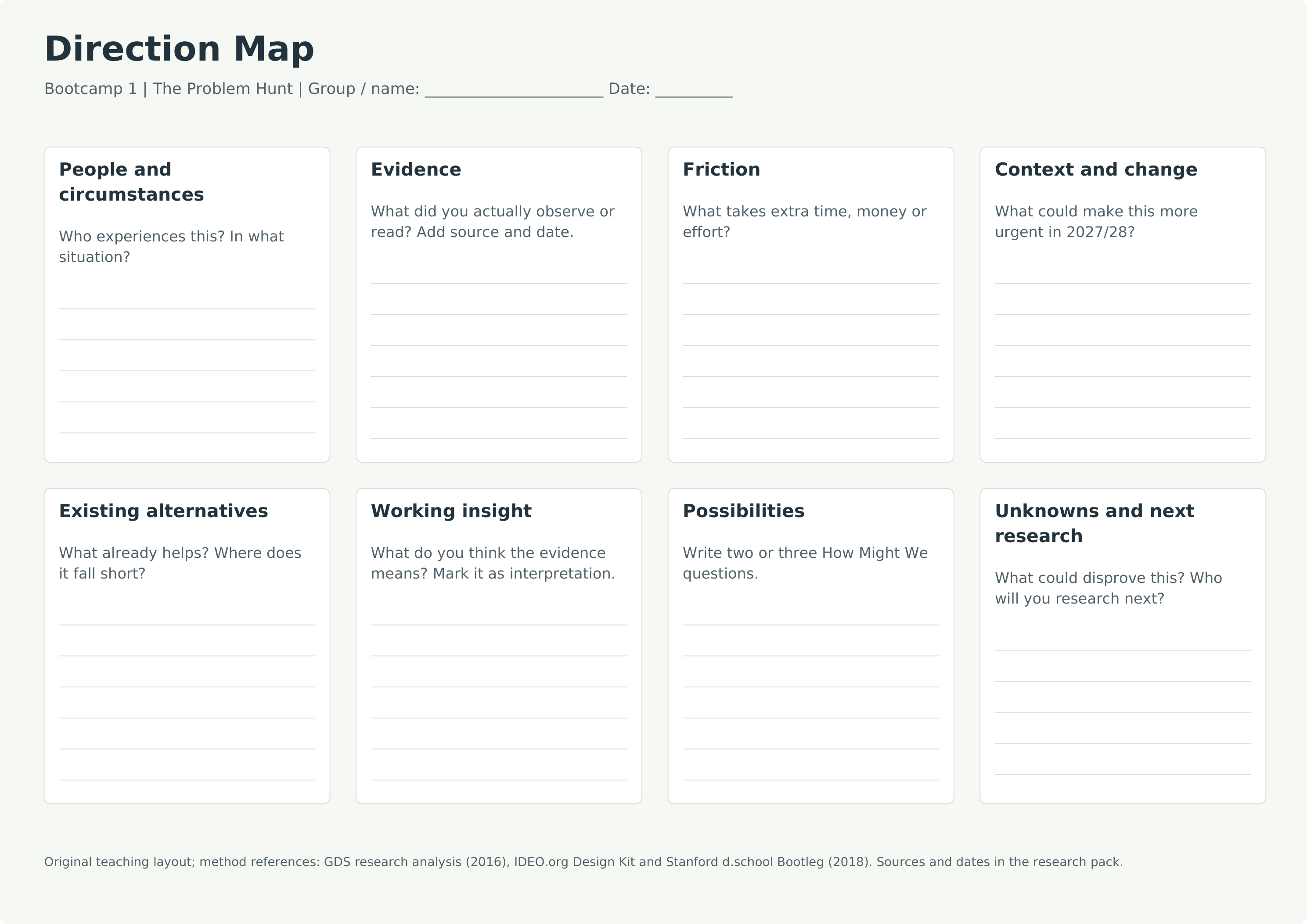
Eight areas on one sheet

1 · People and circumstances
A specific group, situation and task. Who, and when?
2 · Evidence
Observations, quotes, data. Source, date, person.
3 · Frictions
Repeated difficulties and current workarounds.
4 · Context and change
Market, cultural, technical or policy signals.
5 · Existing alternatives
What already helps, and where it falls short.
6 · Tension and insight
An interpretation tied to the evidence.
7 · Possibilities
Two or three bounded opportunity questions.
8 · Unknowns and next research
Assumptions and the tests that could disprove you.
Blank Direction Map A3 sheet with eight labelled areas
Direction Map, blank A3 teaching sheet. Original teaching graphic for this Bootcamp.
The discipline

Evidence is not interpretation

E
Evidence note
What you actually saw or heard. Carries a source, a date, and the person or context. Example: a dated survey release, or one shopper you watched.
I
Interpretation note
Your reasoned reading of the evidence. Labelled as yours, kept visibly separate, and open to being wrong.
Watch for
A national statistic shows scale, not lived experience. "61% cited poor fit" is a sample of respondents, not a feeling you can design for until you have met someone who lives it.
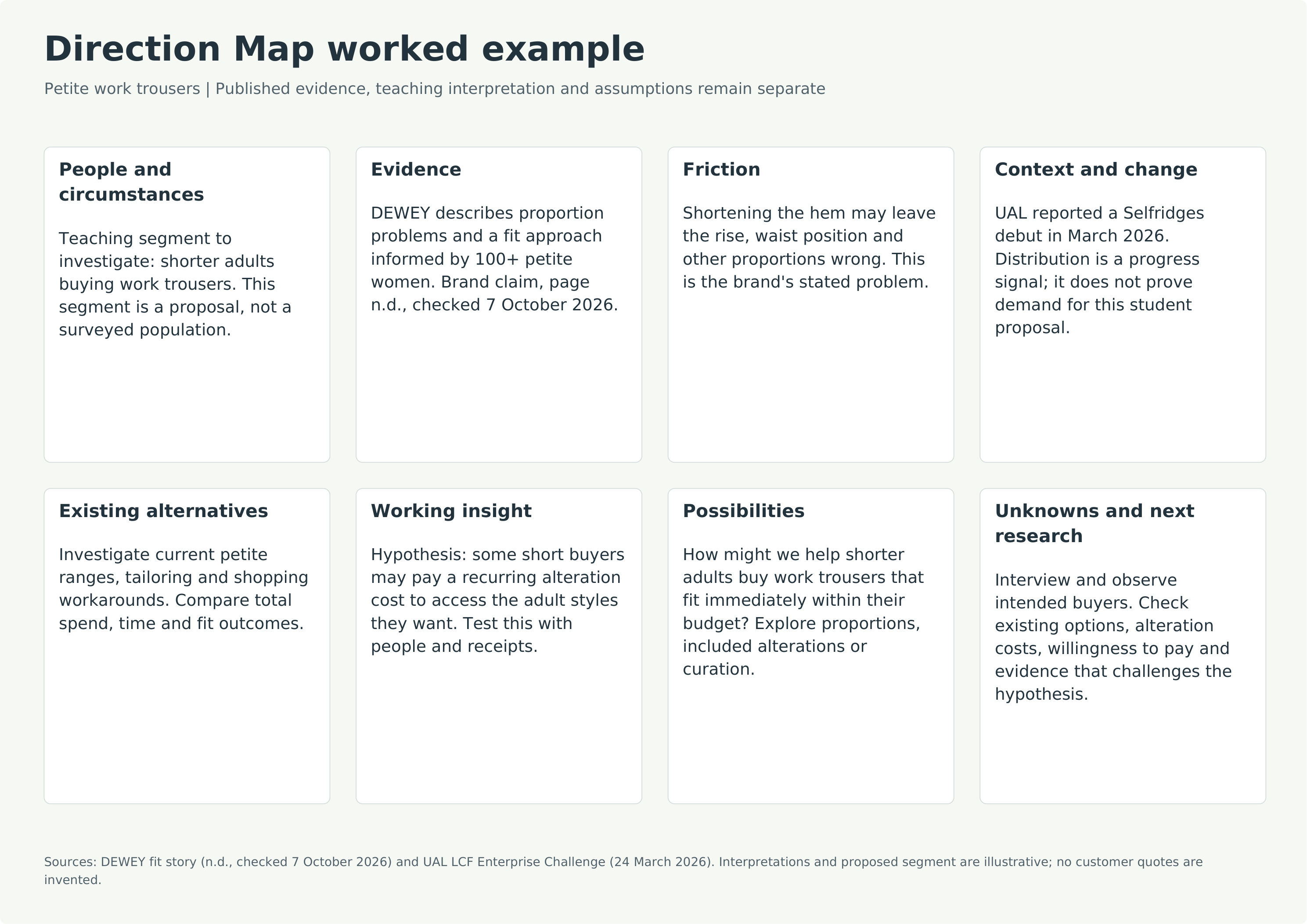
Worked example · petite fashion to DEWEY

One topic through the map

Published evidence
DEWEY describes poor fit across garment proportions and a fit system built on data from more than 100 petite women.
Working insight, to test
Some short women may be paying a recurring alteration cost to access adult styles. This is an inference, not a quote.
Possibility
How might we help shorter adults buy work trousers that fit immediately, within budget?
Next research
Observe intended customers, record existing options and alteration spend, test interest at real prices.
Worked Direction Map example for petite fashion
Direction Map, worked example. Teaching interpretations and assumptions are marked as such.
The exit statement

Fill this sentence to leave

In this situation, these people struggle to achieve this outcome because of this barrier. Our evidence is this; our biggest assumption is this; our next research action is this.

Basis: GDS analyse a research session (2016), Stanford d.school Bootleg (2018), IDEO.org Create Insight Statements. The output records a researchable problem and an action, not an unsupported product concept.

Clothing rails in a retail space
Section 02 · Why problem led

What could be better?

Seven businesses that started from a problem a real person felt, not a product someone wanted to make. Three in depth, then four more at pace.

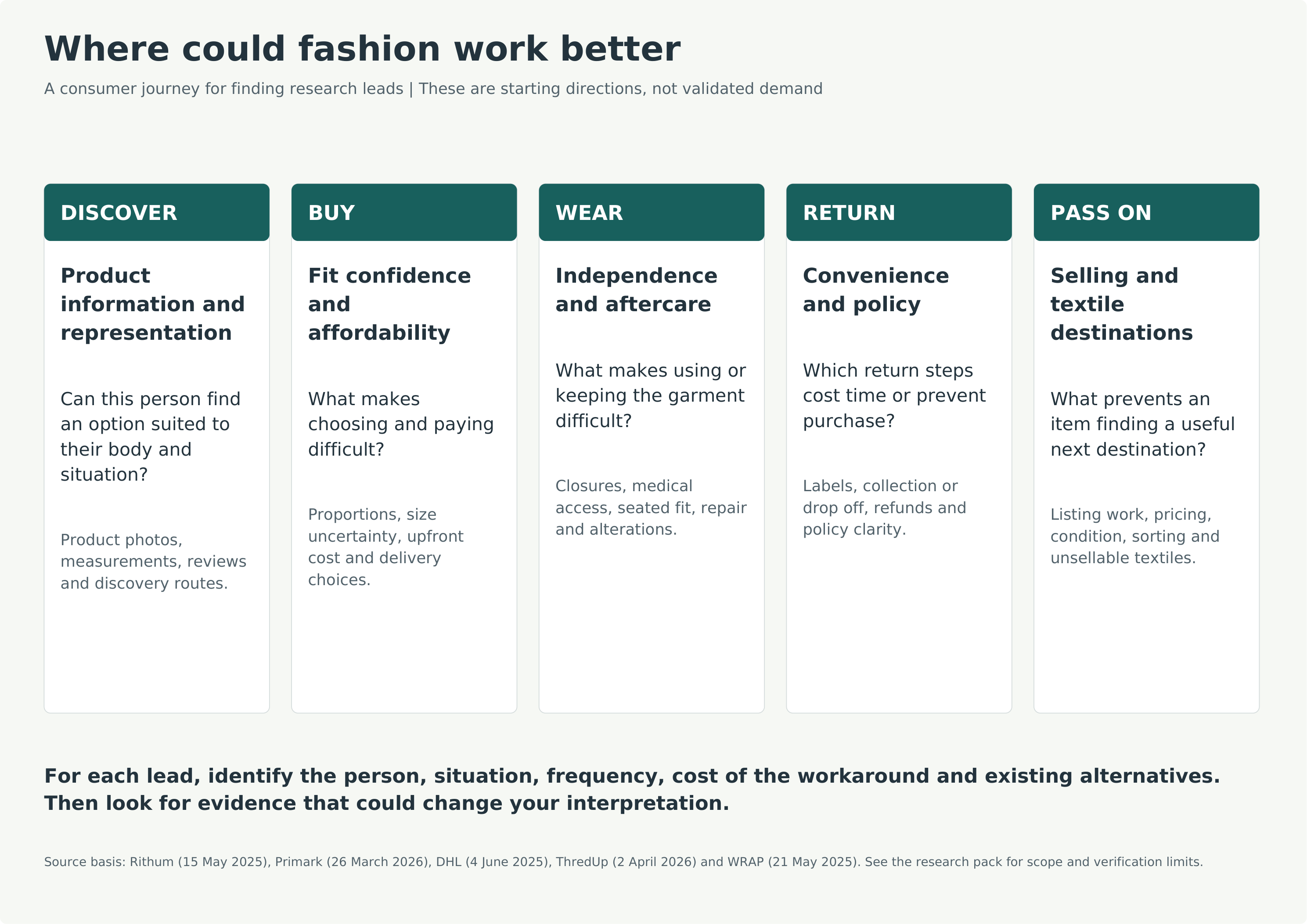
The fashion friction journey

Where it goes wrong, with evidence

Discovery · information
33% returned items that did not match the online description or images. Rithum, 15 May 2025. 6,000+ respondents, five markets.
Buying · fit
61% cited poor fit as the main return reason. Rithum, 15 May 2025. Respondents who returned, not all garments.
Wearing · accessibility
75% struggle to find accessible clothing; 80% feel excluded. Primark with RIDC, 21 Jan 2025. Surveyed disabled community, not all shoppers.
Wearing · repair
82.2% UK weighted repair displacement rate. WRAP, 27 Feb 2025. An avoided purchase estimate, not emissions.
Returns
19.3% of US online sales projected returned in 2025. NRF and Happy Returns, 15 Oct 2025. US retail, a projection.
Disposal · resale
393bn USD secondhand market forecast by 2030. ThredUp and GlobalData, 2 Apr 2026. A forecast, not today.

Stages: discovery, buying, wearing, returns, disposal. Each figure keeps its sample and its caveat. McKinsey and BoF State of Fashion 2026 (17 Nov 2025) add value-conscious trading down and secondhand growth as a market signal, not proof any one customer will pay.

Fashion friction journey across five stages
Fashion friction journey. Original teaching graphic for this Bootcamp.
Case 01 · SOJO · repair and alterations · the friction is effort, not skill

Making aftercare easier than replacing

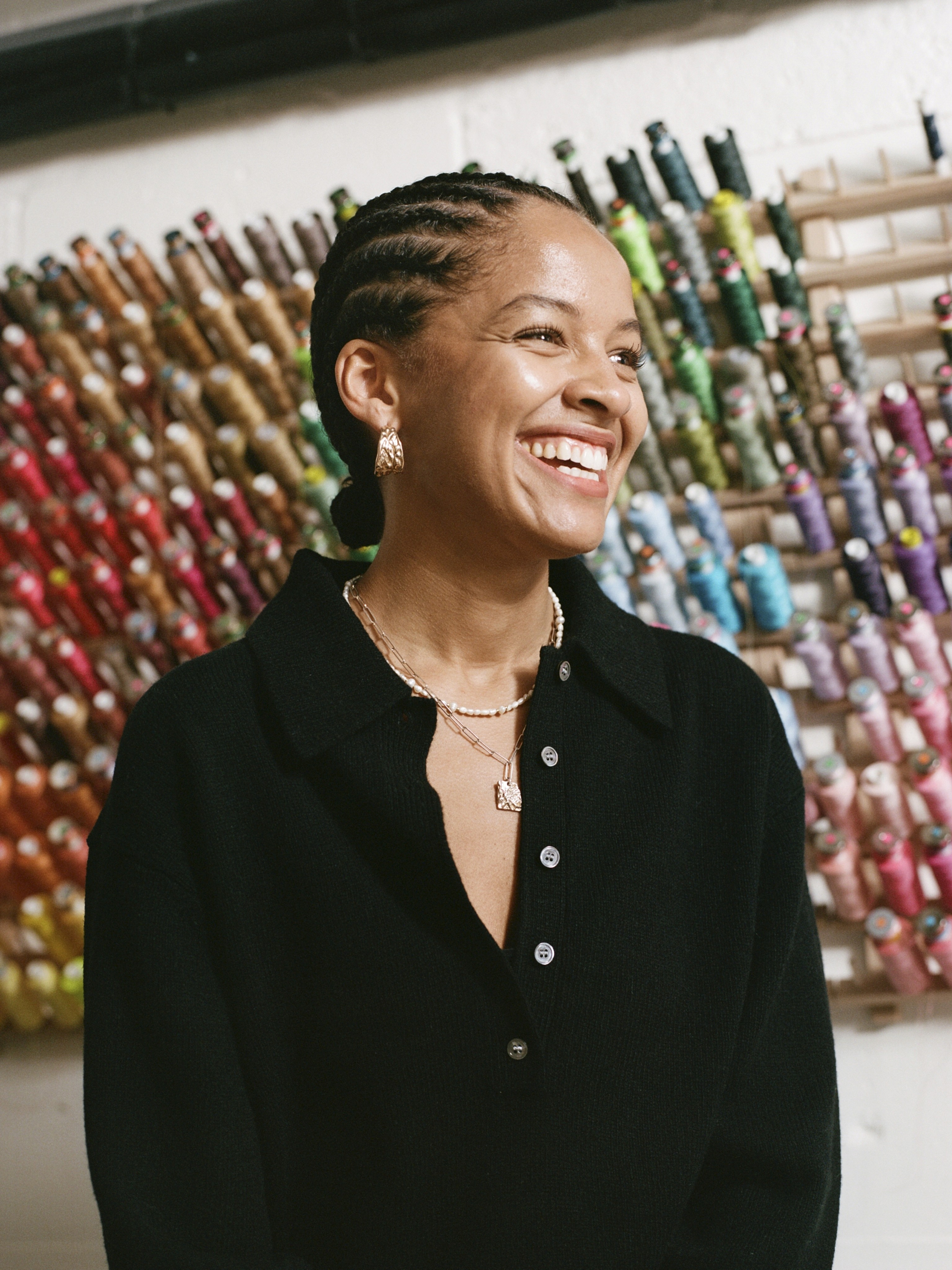
SOJO founder Josephine Philips
Rights restricted
Josephine Philips, SOJO. Reference copy, photographer not established. Classroom illustration only.
The problem
The skill to fix a garment already exists. The friction is logistics: finding a tailor, getting there, judging whether it is worth it. For most people that is more effort than buying new, so a wearable garment gets replaced.
Who felt it
Founder Josephine Philips, people whose clothes did not quite fit, and retailers who needed an aftercare option to sell repair and resale credibly.
What they built
Launched 2021. They did not reinvent sewing, they rebuilt the route to it: online booking, drop-off or home collection and delivery, physical studios, and partnerships that put repair inside a retailer's own journey.
Evidence
Won the UK stage of eBay's 2025 Circular Fashion Fund. M&S repair partnership confirmed July 2025, putting the service behind a high-street name.
Why it matters for you
A real problem can sit in the convenience and distribution around a familiar craft, not in a new product. Ask where the effort is, not just where the skill is missing.
Hold the line
Prize wording differs between SOJO and eBay, so we state no precise amount. Winning a fund is recognition, not a proven volume of garments repaired.
Case 02 · DEWEY · petite ready to wear · a workaround reveals a segment

Designing for proportions, not just hems

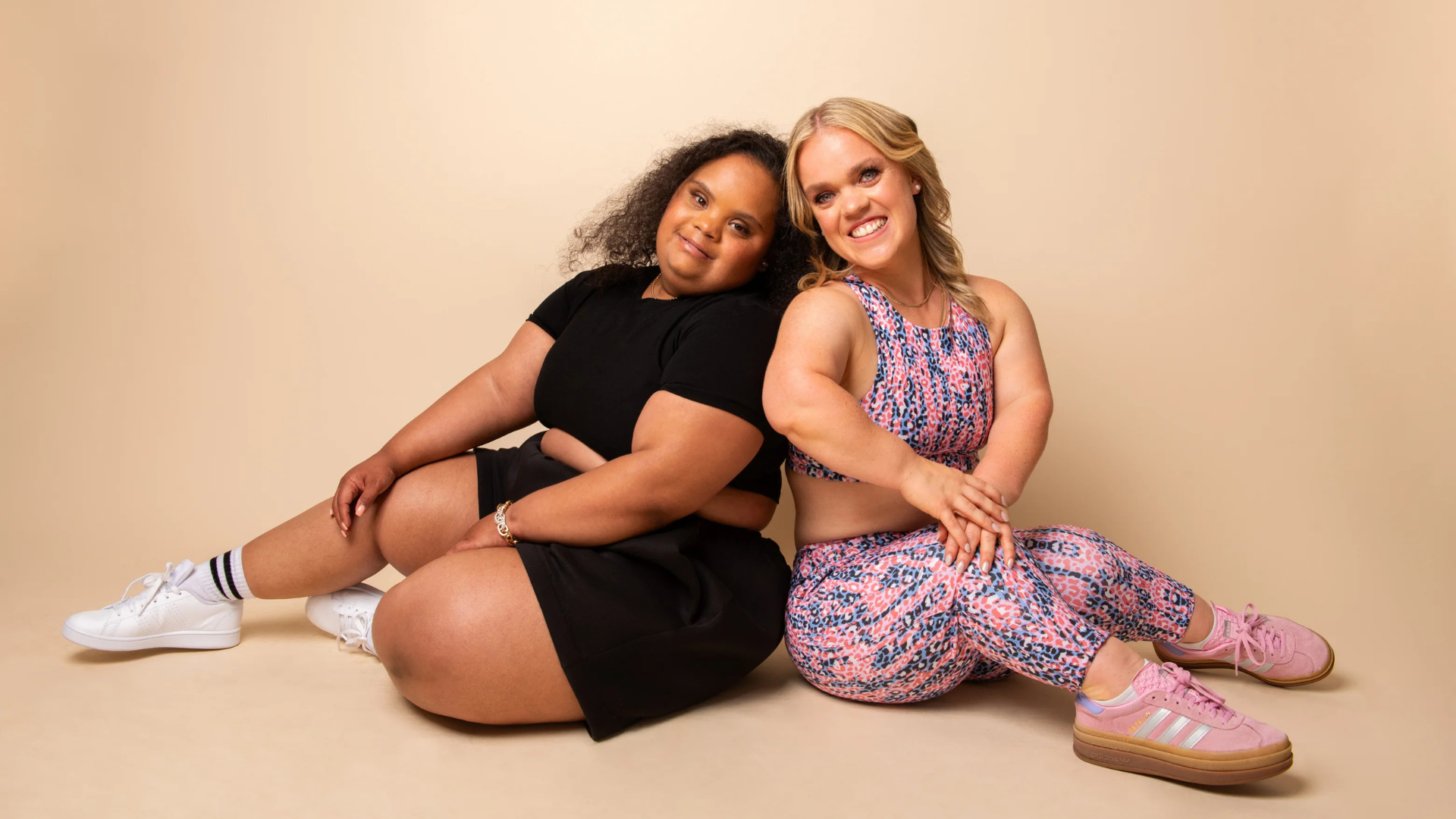
DEWEY petite fashion campaign, founder Chamiah Dewey
Rights restricted
DEWEY / University of the Arts London, 24 Mar 2026. Reference copy, classroom illustration only.
The problem
"Petite" is treated as "shorter hem". In reality the rise, waist, sleeve and whole proportion are wrong for shorter adults, so a shortened garment still does not fit. The common fix is paying for alterations on every piece.
Who felt it
Founder Chamiah Dewey and shorter women, including people of short stature, who pay a recurring cost to make standard clothing work.
What they built
Ready-to-wear cut for shorter proportions, built on a fit system the brand says uses data from 100+ petite women, so proportion is designed in rather than corrected afterwards.
Evidence
LCF, March 2026: a Selfridges debut, a community of around 20,000, and investment from the founder of Nobody's Child.
100+
petite women in the fit dataset (brand's own figure)
20,000
community, not customers
Selfridges
retail debut
Why it matters for you
A recurring workaround (paying for alterations) is a flashing signal. Follow the workaround and it names a specific, underserved customer. Who else pays to make a standard product fit?
Hold the line
Followers are not customers. These show distribution, audience and backing, not sales or a controlled fit result. Founding developed around 2020 to 2021.
Case 03 · Refiberd · fashion technology, B2B · the opportunity is an invisible step

An opportunity in a neglected step

Refiberd material detection website graphic
Rights restricted
Refiberd website graphic. Illustrative, not a verified performance result. Classroom illustration only.
The problem
Textile recycling fails at an unglamorous step: without reliable fibre-composition data, sorters cannot match a discarded garment to the right recycling process. The bottleneck is knowing what the fabric is.
Who felt it
Not shoppers. Textile recyclers and sorters, and brands trying to build circular supply chains they can actually depend on. This is a B2B customer, not a clothing buyer.
What they built
Material detection combining hyperspectral imaging with AI to identify fibres and feed sorting inside existing recycling infrastructure. A technology business, not a label.
Evidence
eBay announced investment and named it Circular Fashion Innovator of the Year, 9 April 2025.
$300k
eBay investment, 9 Apr 2025
Innovator
of the Year
Circular Fashion, 2025
Why it matters for you
The best opportunity is not always the finished product. It can sit in an invisible enabling step that everyone else skips, and the customer may be a business, not a consumer.
Hold the line
Investment and recognition are not garments recycled or profitability. Detection performance is the company's own account, not independently assessed.
Four more problem-led businesses

Same discipline, different frictions

+ detail
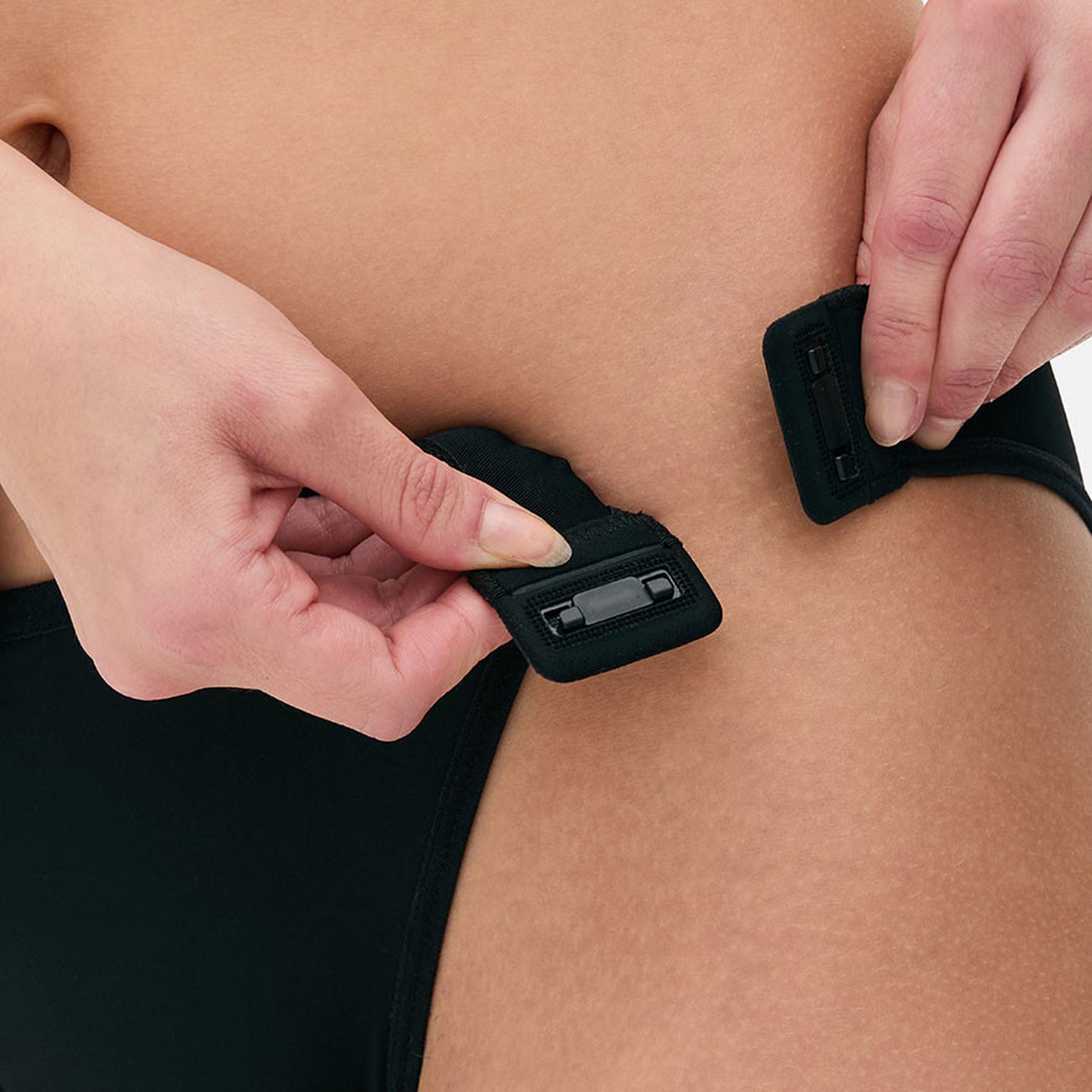
Primark adaptive swimwear closure, Victoria Jenkins collaboration
Rights restricted
Primark, 26 Mar 2026.
Unhidden · adaptive
Clothes can stop disabled people dressing comfortably and with style. Victoria Jenkins builds adaptive wear and consults.
49 / 96 / 10
products / stores / countries, Primark collab reach, WRC Apr 2026. Not Unhidden sales.
+ detail
Retail rails illustrating fit and returns data
Illustrative photo, Unsplash.
Fit Collective · B2B data
Inconsistent fit drives returns and the reasons never reach product teams. A fit-data platform for brands.
£3m
pre-seed raised, AlbionVC 4 Nov 2025. Finance, not revenue. 10-30% returns cut is an unaudited claim.
+ detail
Garment detail illustrating rental and reuse
Illustrative photo, Unsplash.
Pickle · P2P rental
Occasion outfits are costly and underused while nearby wardrobes sit idle. Peer-to-peer rental, after a pivot from a polling app.
$12m
Series A + 200k+ listings, FirstMark Mar 2025. Listings are not completed rentals.
+ detail
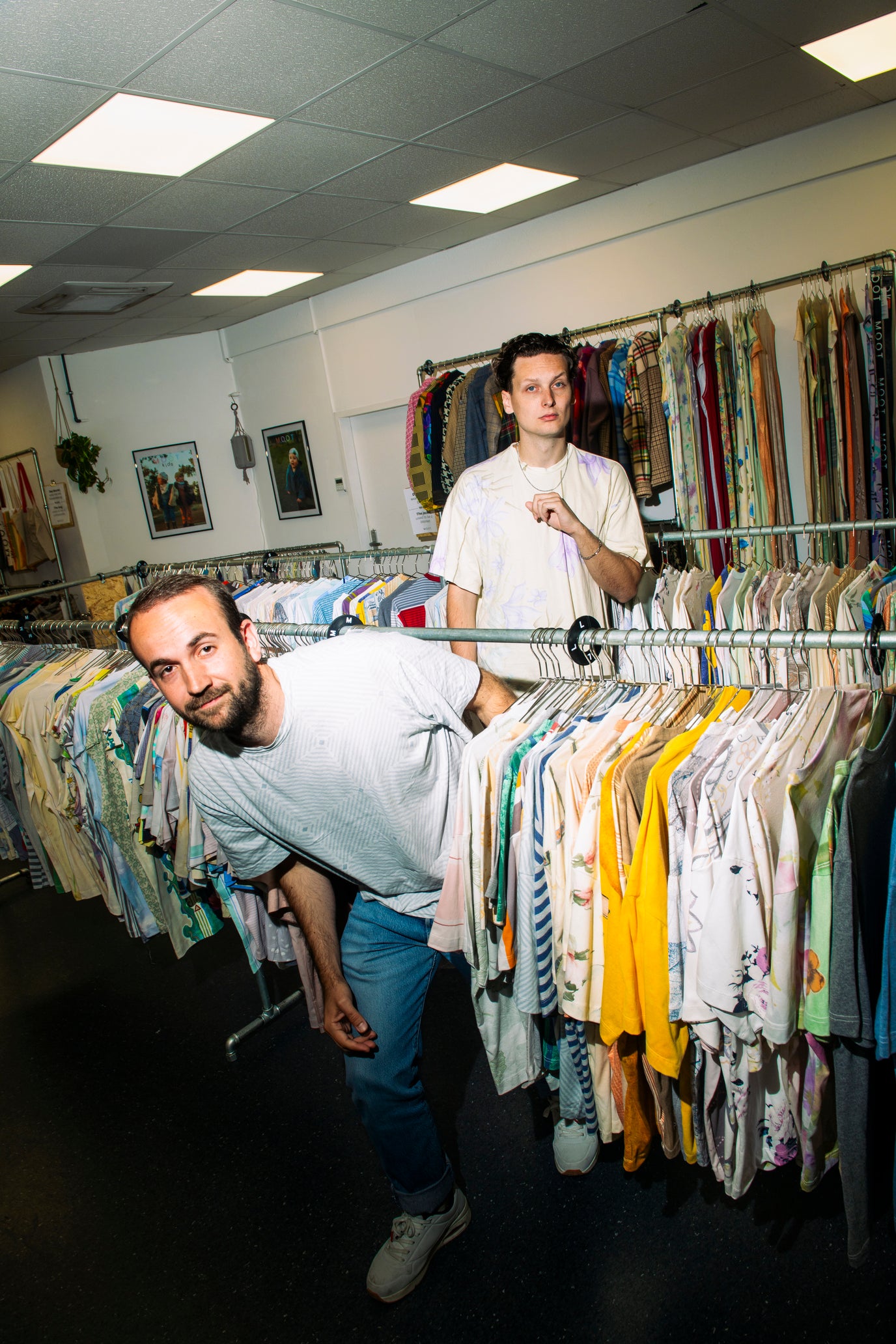
MOOT founders with rescued-textile clothing rails
Rights restricted
MOOT. Reference copy only.
MOOT · rescued textiles
Usable textiles are discarded while new material is made. Clothing from rescued fabric, plus material services for organisations.
Fund
winner
Germany, 2025 Circular Fashion Fund, FCG Feb 2026. Selection, not scale.
Hold the line · click any card for the full case
Three of four report funding or reach, not profit. Pickle shows the lesson that matters most today: a strong business can emerge from a pivot, so be willing to revise your starting idea when the evidence points elsewhere.
Six opportunity directions

Research spaces, not empty markets

1
Precision fit
A specific underserved body, movement, life stage or garment. DEWEY and Fit Collective already work here.
2
Adaptive and accessible buying
Can the right garment be found, tried, ordered and delivered conveniently? Unhidden works here.
3
Integrated repair and alteration
A predictable service for one category or group. SOJO and M&S work here.
4
Easier selling, resale ready
Assisted listings, reliable condition data, a credible route for used pieces. ThredUp works here.
5
Useful discovery, trustworthy info
Curation, better garment detail, help finding appropriate options for a real situation.
6
End of life designed in
Materials, trims, disassembly and realistic take back for a narrow product group. MOOT works here.
Morning activity · 15 min · before lunch

Problem Pitch, Customer Check

A fast, live warm-up for the afternoon. One person pitches a problem in a single sentence. The room acts as the customer and answers honestly. You are testing one thing: do real people actually hit this?

Step 1 · Shoot
A student states one fashion problem in a sentence: who, doing what, where it goes wrong.
Step 2 · Customer check
Hands up if you have genuinely hit this. Two people say what they do instead.
Step 3 · Mark it
Note the show of hands and the workarounds on the board. Next student.
What you are learning
A problem many people recognise and already work around is a strong lead. A problem only you feel, or that gets a blank look, is a weak start, or you described it too narrowly. This is the fastest cheap test there is.
Hold the line
A show of hands in one classroom is a warm signal, not validation. Your classmates are not your target customer. It practises the move; real research still comes this afternoon and next week.
Sewing machine detail
Section 03 · Workshop · 13:30 to 16:00

Your Problem Hunt

5 min
Record 3 recent fashion frustrations.
10 min
Theme them.
10 min
Pick 2 themes, alternatives, workaround cost.
10 min
Problem statement plus 2 How Might We each.
5 min
Next research action.
The method behind step 2 · how to theme your notes

What an affinity wall is

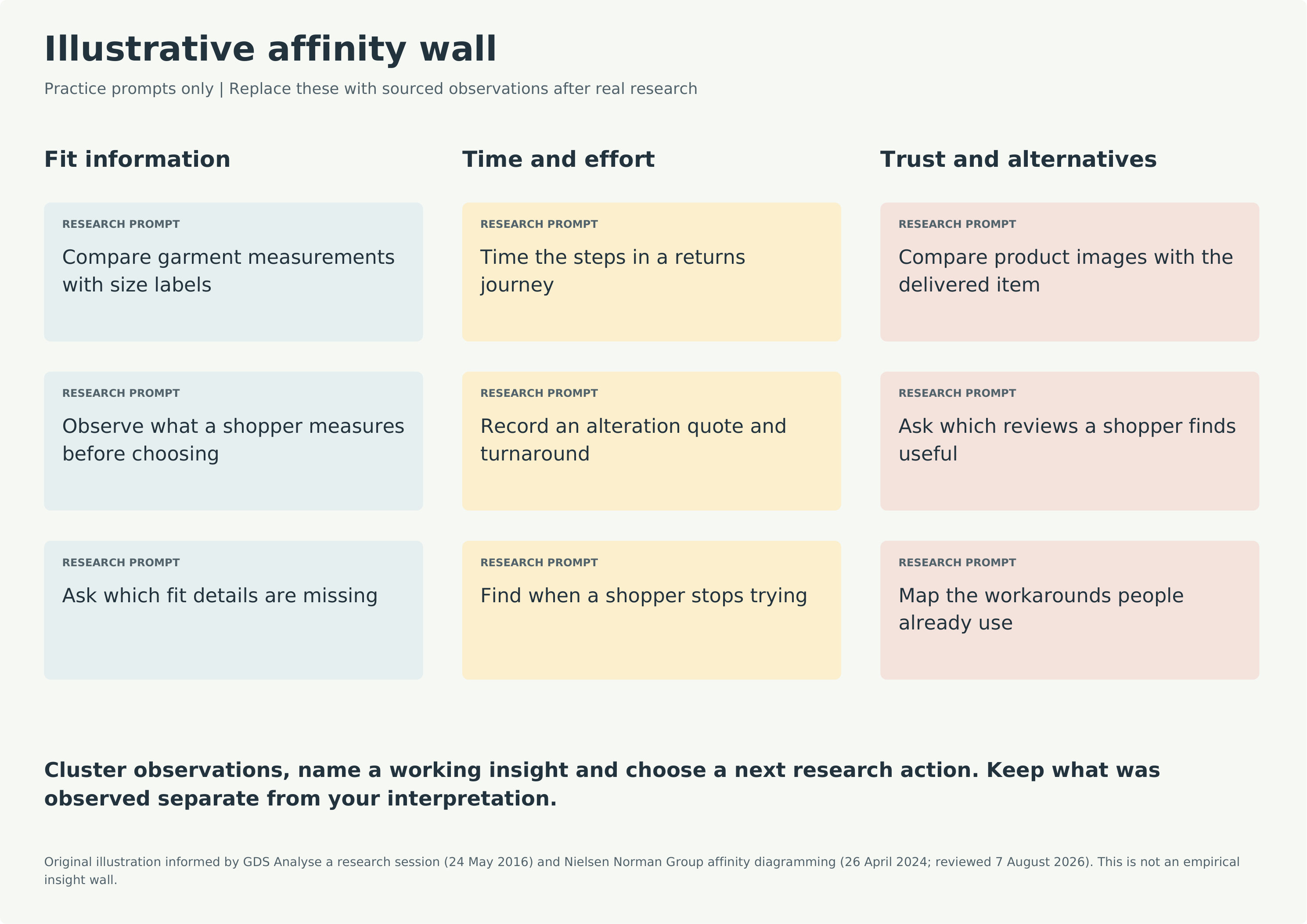
Write one observation per sticky note, stick them all up loose, then physically move the ones that belong together into groups. Name each group. The themes are not decided in advance, they emerge from the notes. That is the whole technique.

1 · Loose notes (one observation each)
Measured garment vs size label
Photo looked unlike the item
Returns journey took 4 steps
Checks fit details first
Got an alteration quote
Relies on reviews to decide
Colour marks evidence type: observed, published, assumed. Not the theme.
→
2 · Clustered and named → working insight
Fit information
Measured garment vs label
Checks fit details first
Insight: shoppers self-measure because labels are not trusted.
Time and effort
Returns took 4 steps
Got an alteration quote
Insight: the cost is effort, not just money.
Trust and alternatives
Photo unlike the item
Relies on reviews
Insight: reviews replace missing product truth.

Method, not a finding. Example notes are teaching prompts. Basis: GDS Analyse a research session (2016); NN/g affinity diagramming (2024).

Before you write · what a good note looks like

Person, task, setting

Each note should let a stranger picture the exact moment. Name the person, what they were trying to do, and where it went wrong. Not a general complaint, a specific scene.

My flatmate trying to return a dress that didn't fit gave up because the nearest drop-off was a 25-minute bus ride and the label expired in 3 days.
Friction: returns effort
A 5'2" colleague buying work trousers online had to order three sizes to one address, keep one, and pay a tailor £15 to take up the hem.
Friction: petite fit + alteration cost
My uncle after shoulder surgery getting dressed each morning couldn't do up a normal shirt one-handed, so he's worn the same two zip hoodies for a month.
Friction: dressing with limited mobility
Too vague · can't research it
"Sizing is bad." No person, no moment, nothing to go and check.
Specific · a real lead
The petite trousers note above. You know exactly who to talk to and what to measure.

The test: could you go and find this exact person tomorrow? If yes, it is specific enough. Teaching examples, not collected data.

Workshop · steps 1 and 2 · now do it with your own notes

Record, then theme

Do this now · 5 min
Write 3 recent fashion frustrations, one per note. For each, name the person, the task and the setting. Specifics, not "sizing is bad".
Then · 10 min
Cluster them into themes the way the affinity wall showed, then name each theme. Mark each note as published evidence, direct observation, or assumption, and keep the three types visibly separate.
The point
You are turning scattered annoyances into a small number of named themes you can research. The theme, not the single note, is what you take forward.
Filled affinity wall example with three themed columns of research prompts
A filled affinity wall, as a worked example. These are teaching prompts, not real interview findings.
Workshop · steps 3 and 4 · framing with How Might We (Stanford d.school)

Narrow, then frame

Do this now · 10 min
Pick 2 themes. For each: who is affected, existing alternatives, and the cost of each workaround in time, money or effort. Add evidence that challenges your reading.
Then · 10 min
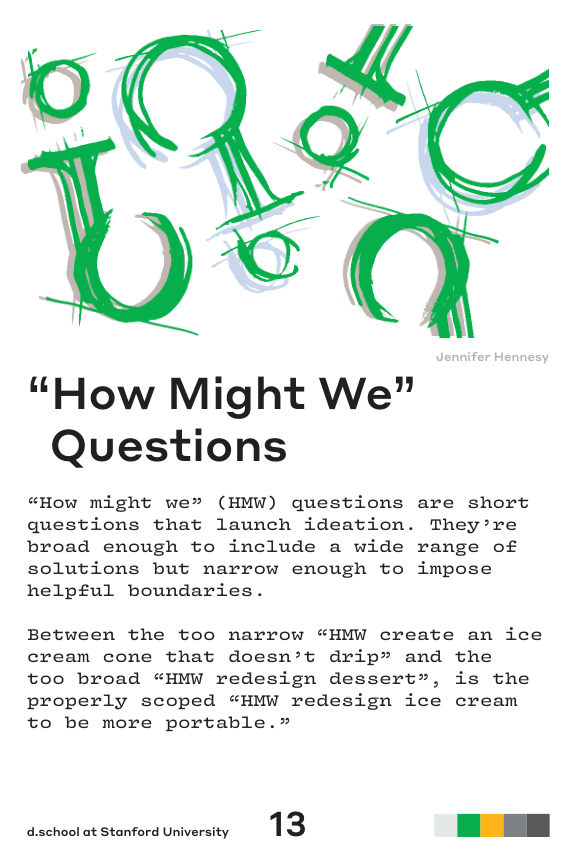
Write a problem statement and 2 "How Might We" questions per theme. HMW turns a problem into an invitation to solve it, framed so several answers stay open.
Too narrow
"How might we add a size chart?" Already contains the answer.
Open enough
"How might we help shorter adults buy trousers that fit immediately?"
Watch for
The person who experiences the problem and the person who would pay for a response may be different people. Note both.
Stanford d.school How Might We method card
How Might We card. Stanford d.school Design Thinking Bootleg 2018, CC BY-NC-SA 4.0.
Workshop · step 5

Choose the next move

Do this now · 5 min
Choose your next research action and put it on your Direction Map. Name a person to contact or observe, and a test that could change your conclusion.
End on the exit statement: in this situation, these people struggle to achieve this outcome because of this barrier. Our evidence is this; our biggest assumption is this; our next research action is this.
A shopper carrying bags against a plain wall
Section 04 · The thinking tools · minimum two theories required

Two frameworks, applied to your own evidence.

Jobs to Be Done explains what the person is really trying to achieve. The Double Diamond explains the process you are in right now. The brief asks you to apply them, not just define them.

Framework 01 · Jobs to Be Done · Christensen

People hire a product to make progress

Do not start from who the customer is. Start from the progress they are trying to make in a specific situation, and what makes that change hard.

Functional
The practical task. Dress appropriately for a wedding this Saturday within a set budget.
Emotional
How they want to feel. Confident and appropriate, not anxious about standing out for the wrong reason.
Social
How they want to be seen. As someone who belongs in the room and made an effort.
How to apply it here
For a shopper, ask: what are they trying to achieve, what prompted the search, what do they do now, and what makes change difficult? Occasion rental might help someone take part in an event confidently within budget. The job is bigger than acquiring a dress.
Why it beats a demographic
"Women 18 to 25" is not a job. JTBD connects the problem to the real alternatives a person already uses (borrow, buy and return, wear an old one), which is where the opportunity actually sits.

Citable: Christensen Institute, Jobs to Be Done theory (accessed 7 Oct 2026). Canonical book: Christensen et al., Competing Against Luck (2016). The rental example is a teaching application.

Jobs to Be Done · worked on one shopper (links to the DEWEY case)

The same method, filled in

Situation: a petite professional needs work trousers for a new job starting Monday, on a limited budget.
Functional job
Get trousers that fit the rise, waist and leg without paying for alterations, in time for Monday.
Emotional job
Feel put-together and taken seriously on day one, not self-conscious about turn-ups or a bad fit.
Social job
Be read as a competent professional who belongs in the team.
What she does now (the alternatives)
Buys standard petite and pays a tailor; or sizes down and lives with the waist; or wears an old pair. Each has a cost in money, time or confidence.
What makes change hard (the opportunity)
No off-the-peg option fits immediately at her budget. A brand that removes the alteration step entirely is hiring itself for this exact job.

Teaching reconstruction built on DEWEY's described problem, not a documented interview. The job and alternatives are inferences to test with real people.

Framework 02 · Double Diamond · Design Council

Widen before you narrow, twice

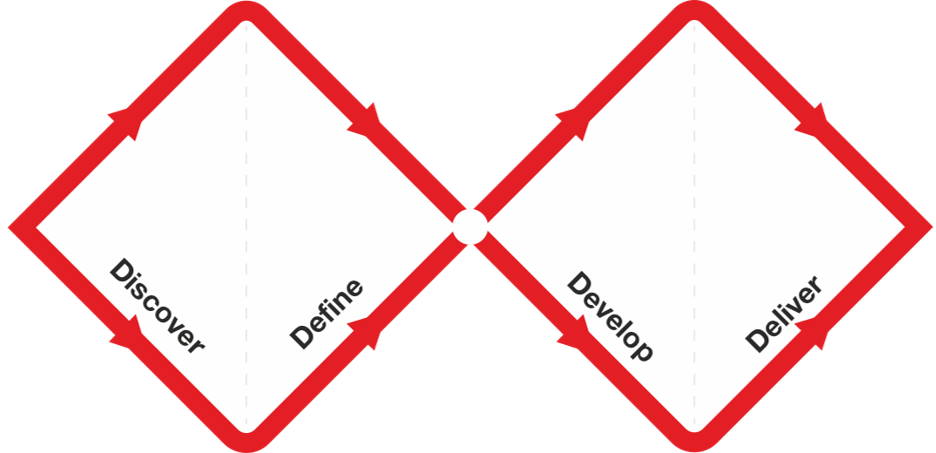
Good projects diverge then converge, twice. You explore widely, then commit to a focus, and do it again for the solution. Today lives entirely in the first diamond.

01 Discover
Explore the problem
Interviews, observation, evidence. Widen. You are here.
02 Define
Focus the challenge
Synthesise into one problem worth solving. Early part only.
03 Develop
Explore responses
Prototype options. Later in the module.
04 Deliver
Test and refine
Validate, build the pitch. Later still.
Where Bootcamp 1 sits
Discover and the early part of Define. The whole point today is to resist jumping to Develop. Prototype evidence later may legitimately send you back to redefine the problem; that is the process working, not failing.
The Double Diamond framework diagram
The Double Diamond by the Design Council, CC BY 4.0. Framework launched 2004.
Into independent study · Tue 13 October

What good looks like

01
A researchable problem
Tied to a specific person and situation, with dated evidence behind it.
02
A named assumption
The thing you believe but have not yet tested, written down as a risk.
03
A next test
One action that could change your conclusion, with a person to contact or observe.
Not this
A product concept with no person, no evidence and no assumption named. That is an idea you like, not a direction you can defend.
Take this away

Your workshop worksheets

Everything you filled today has a printable sheet. Download, print A3, and keep working on them this week. The blank Direction Map is the skeleton of section 1 of your final PDF, so filling it in is the assignment, not extra work.

⬇ Download all worksheets (A3 PDF) ⬇ Blank Direction Map ⬇ Friction journey
Direction Map
The eight-area sheet. Keep evidence and interpretation separate, with a source and date on every note.
Affinity wall
One observation per note, cluster, then name each theme. Use it to run step 2 again at home.
Friction journey
Discovery to disposal. Mark where your person struggles and what evidence already exists.
Tutor prep · not for projection

Video index and sources

Video play chips (links only, open new tab)
▶ SOJO · Josephine Philips, TED (8:25) ▶ Pickle · founder pivot (05:47 to 07:31) ▶ JTBD explainer (reserve)

Play from the official player. Do not make or distribute an edited excerpt. Pickle and JTBD runtimes and playback were not fully verified.

Sources and reading list (open new tab)

Visual rights: reusable photos and original teaching graphics are free to show; the Double Diamond is CC BY 4.0. Brand reference images (SOJO, DEWEY, Refiberd, Primark/Unhidden, MOOT) are rights restricted reference copies shown here only as illustration for instruction in class, each credited on slide. Do not publish, redistribute or post them without the rights holder's permission or an applicable institutional licence.

Tutor notes